


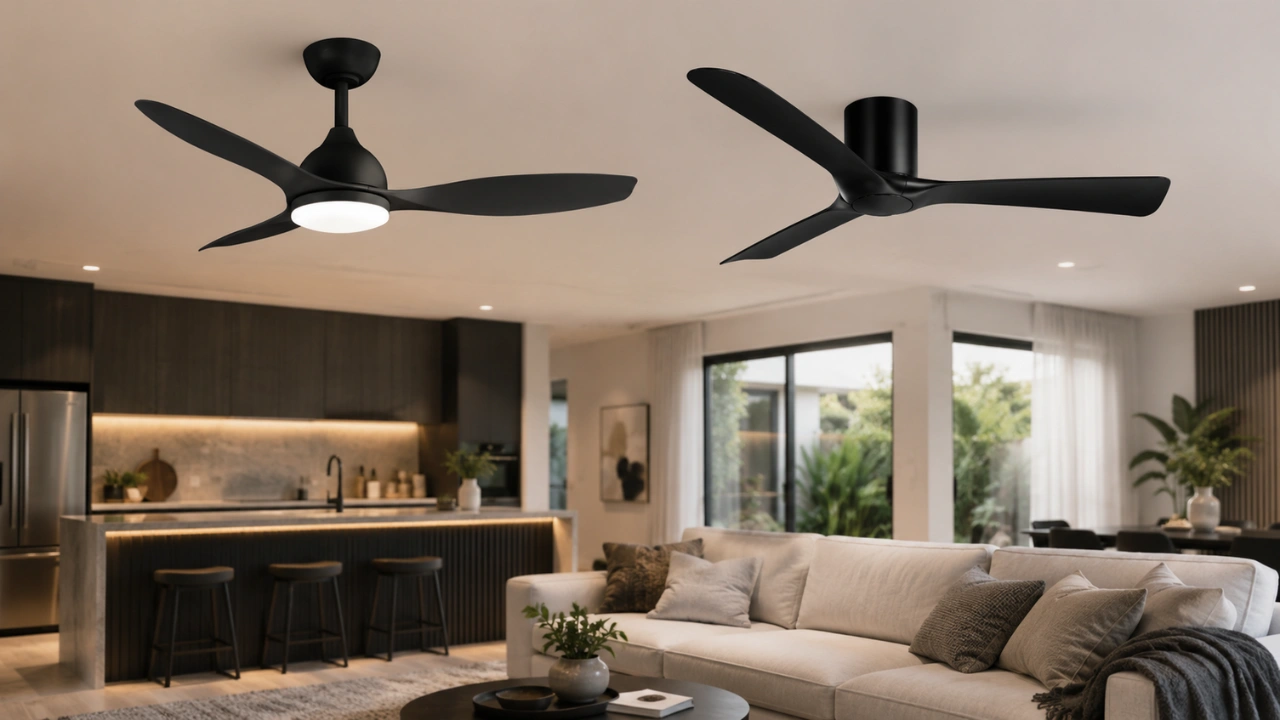
When shopping for ceiling fans, many homeowners make the same assumption.
If two fans cost roughly the same amount, they should perform the same.
On paper, it sounds logical.
Both fans may have a similar size, similar appearance and a similar price tag. Online photos might even make them look almost identical.
Then one fan delivers strong airflow, runs quietly and keeps the room comfortable year after year.
The other struggles to move air effectively, develops noise issues and consumes more power than expected.
This often leaves buyers asking a simple question.
How can two fans that cost the same perform so differently?
The answer comes down to what sits behind the design.
If you are researching affordable ceiling fans in Australia, it is important to look beyond the price and focus on the factors that directly affect performance, comfort and long term value.
Let’s look at what separates a good ceiling fan from one that simply looks good in a product photo.
Not All Fan Blades are Created Equal
Most buyers notice blade colour and style first.
Black, white, timber finish or modern matte designs often influence purchasing decisions.
What many people overlook is the blade design itself.
The shape, angle and construction of the blade play a major role in airflow performance.
A well designed blade captures and pushes more air with less effort.
A poorly designed blade may spin quickly but move surprisingly little air.
Think about it like a boat paddle.
The shape of the paddle determines how efficiently it moves through water.
Ceiling fan blades work in a similar way.
Two fans may both have three blades and the same diameter, yet one can produce significantly stronger airflow because of superior blade engineering.
Things To Remember
A larger blade does not automatically mean better performance.
Blade shape and pitch often matter more than blade length alone.
Airflow Ratings Tell the Real Story
One of the most important numbers buyers should check is airflow.
Airflow is typically measured in cubic metres per minute.
This figure tells you how much air the fan can move throughout the room.
Many homeowners purchase fans based purely on appearance and never check airflow ratings.
That is where mistakes happen.
Consider the following example:
| Fan Model | Fan Size | Airflow Output |
|---|---|---|
| Fan A | 132cm | 12,000 m³/hr |
| Fan B | 132cm | 18,500 m³/hr |
Both fans may look almost identical online.
Both may cost a similar amount.
Yet Fan B is moving substantially more air.
That difference becomes noticeable every day during summer.
When comparing ceiling fans, airflow should always be part of your decision.
The Motor is the Heart of the Fan
If blades are the wings of a ceiling fan, the motor is the engine.
Motor quality has a direct impact on:
- Airflow consistency
- Noise levels
- Energy efficiency
- Longevity
- Reliability
Cheaper motors may perform well initially but often lose efficiency over time.
Higher quality motors maintain smoother operation and typically experience less wear.
Modern DC motors have become increasingly popular throughout Australian homes because they deliver excellent airflow while consuming very little electricity.
Many premium ceiling fans now feature DC technology for precisely this reason.
PRO TIP
When comparing fans at a similar price point, ask about the motor type before making a decision.
The motor often reveals more about long term performance than the exterior design.
Why Some Fans Feel More Comfortable Than Others
Comfort is not simply about airflow volume.
It is about airflow quality.
Some fans create a harsh downward draft that feels strong directly underneath but provides limited comfort elsewhere in the room.
Other fans distribute air more evenly across a larger area.
The result is a room that feels cooler and more comfortable from wall to wall.
This is particularly important in:
- Open plan living areas
- Family rooms
- Dining spaces
- Master bedrooms
- Alfresco entertaining areas
A fan that circulates air efficiently creates a more pleasant environment without constantly needing higher speed settings.
Energy Consumption Can Cost More Than the Purchase Price
Many buyers focus heavily on the purchase price while overlooking running costs.
This can be a costly mistake.
A ceiling fan operates for many hours throughout the year.
Even small differences in energy consumption can add up over time.
Modern energy efficient fans often use surprisingly little power.
Some quality DC fans consume less electricity than many standard household light bulbs.
Compare this example:
| Fan Type | Power Consumption |
|---|---|
| Older AC Fan | 70W to 90W |
| Modern DC Fan | 20W to 35W |
Over several years, those savings become significant.
Particularly during Australian summers when fans may run daily.
For homeowners looking for affordable ceiling fans in Australia, energy efficiency should always form part of the buying decision.
Noise Levels Matter More Than Most People Realise
A ceiling fan can have excellent airflow and still become frustrating if it generates excessive noise.
Noise complaints usually come from three areas:
- Motor vibration
- Blade imbalance
- Poor quality construction
What begins as a minor humming sound can become increasingly noticeable over time.
This becomes especially important in bedrooms where quiet operation directly affects sleep quality.
A quality fan should provide comfort without becoming the loudest object in the room.
Signs of a Well Built Fan
- Smooth startup
- Stable operation
- Minimal vibration
- Quiet motor performance
- Consistent speed control
These details may seem small during purchase but become very important after installation.
Build Quality Often Separates Good Value from Poor Value
Two fans can share the same price point while using very different materials.
One may feature:
- High quality bearings
- Durable motor components
- Strong blade construction
- Reliable electronics
The other may rely on lower grade materials that wear faster.
The difference may not be obvious from online photographs.
This is one reason why showroom visits remain valuable.
Being able to see and compare products in person often reveals details that product images simply cannot show.
Why Online Photos Can Be Misleading
A fan photographed in a beautifully styled room can look impressive.
That does not automatically mean it will perform well.
Many buyers become focused on aesthetics and overlook performance specifications.
A ceiling fan serves two purposes:
- It contributes to the room’s appearance.
- It provides everyday comfort.
Both matter.
The most successful purchases balance style with performance.
Questions Smart Buyers Ask Before Purchasing
Before buying a ceiling fan, ask these questions:
- What is the airflow rating?
- Is the motor AC or DC?
- How much electricity does it consume?
- What warranty is included?
- How quiet is the fan during operation?
- Is it suitable for the room size?
- Are replacement parts available if needed?
These questions often reveal major differences between seemingly similar products.
Why Showroom Visits Can Save You Money
Buying solely from online images often leads to disappointment.
Many homeowners discover too late that the fan they selected is not suitable for the room.
A showroom allows you to:
- Compare blade designs
- Assess build quality
- View finishes in person
- Understand size proportions
- Discuss room requirements with lighting and fan specialists
This often results in a better purchase decision and greater long term satisfaction.
The Real Cost of Buying the Wrong Fan
A ceiling fan is not something most people replace every year.
Installation costs, electrician fees and product costs all add up.
Buying the wrong fan can mean:
- Poor airflow
- Higher electricity bills
- Increased noise
- Reduced comfort
- Early replacement
In many cases, spending the same amount on a better engineered fan delivers far greater value.
That is why performance specifications matter far more than appearance alone.
Visit NES Lighting Before You Buy
If you are comparing affordable ceiling fans in Australia, visit the NES Lighting showroom in Girraween before making a decision.
Our team can help you compare airflow ratings, motor technologies, energy efficiency, noise performance and fan designs so you can purchase with confidence. We stock ceiling fans that are designed to perform well in Australian homes while complementing modern interiors.
Customers regularly visit our showroom from Pendle Hill, Toongabbie, Wentworthville, Greystanes, Seven Hills, Pemulwuy, Westmead, Parramatta, Baulkham Hills, Quakers Hill, Castle Hill, Kellyville, Norwest, Bella Vista, Stanhope Gardens, Blacktown, Wetherill Park, Auburn, Guildford, Merrylands, Fairfield, Marsden Park, Melonba, Colebee, Riverstone, Schofields, Nirimba Fields, Tallawong, The Ponds.
Rather than relying on online photos alone, see the differences for yourself. Compare fan sizes, motor quality, airflow performance and finishes in person at NES Lighting and find the right option from our Ceiling Fans Category that will keep your home comfortable for years to come.