


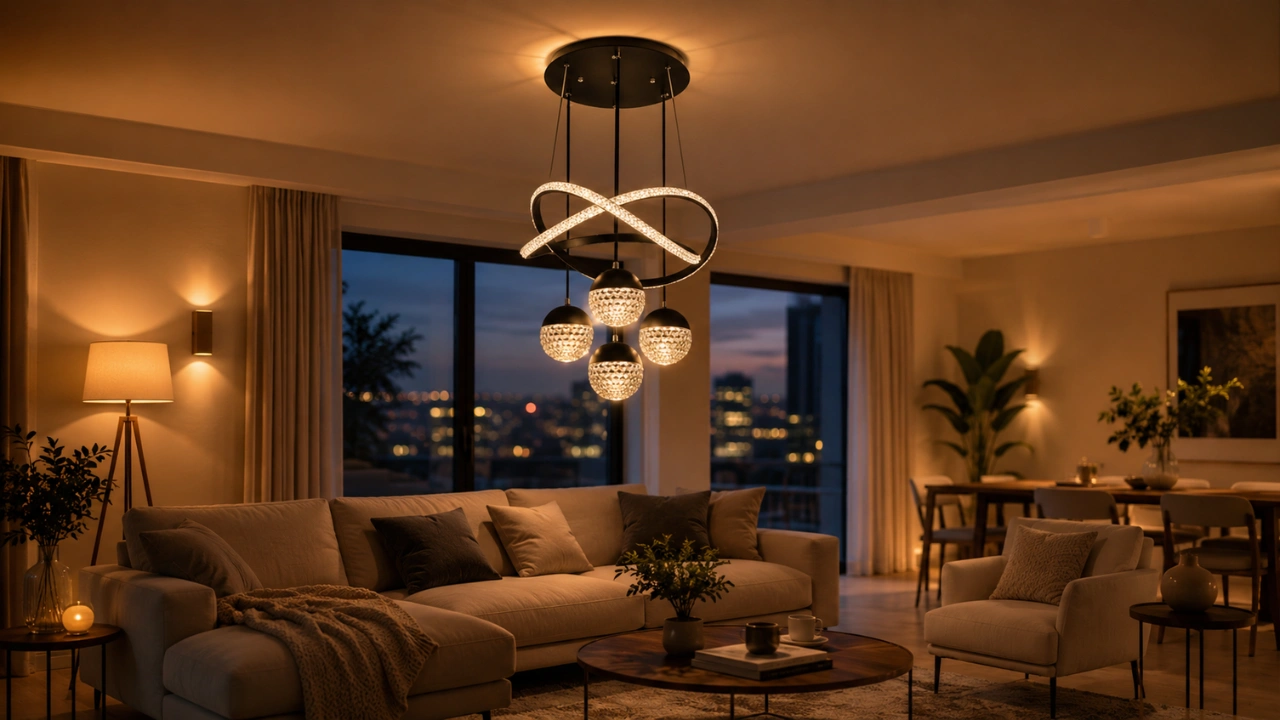
You have probably walked into someone’s home in the evening and felt it immediately. Something about the place just settles you. The air feels quieter, the room feels warmer, and without quite knowing why, your shoulders drop and your whole body relaxes. Then you walk into another home that looks perfectly fine on paper and feel oddly tense, even restless.
The furniture might be identical. The colour palette might even be similar. But one space feels like a retreat and the other feels like a waiting room.
Nine times out of ten, the difference is lighting.
Most people do not realise how profoundly light affects their emotional state, especially in the evening hours. And in Sydney homes specifically, where open-plan living and high ceilings have become standard in new builds and renovations alike, getting the lighting wrong is remarkably easy to do.
The Problem with Bright Ceiling Lights After Sunset
Here is something that does not get talked about enough. The human brain is wired to respond to light as a signal. Bright, cool, overhead light tells your nervous system it is the middle of the day and that you should be alert and active. Warm, low, directional light tells it that the sun is going down and it is time to wind down.
When you sit in a room at 8pm with a single bright ceiling light blazing overhead, you are essentially tricking your brain into staying switched on. You might feel irritable without knowing why. Sleep often comes harder. And the room never quite feels like a place you want to linger in.
This is not a design opinion. It is physiology. And it is one of the main reasons some homes feel genuinely restorative in the evening while others do not.
THINGS TO REMEMBER
Your eyes are most sensitive to cool, blue-toned light. At night, this type of light suppresses melatonin production and keeps your brain in daytime mode. Switching to warm light sources in the evening is one of the simplest things you can do for both your mood and your sleep quality.
Warm Light Is Doing More Work Than You Realise
Warm light, typically anything in the 2700K to 3000K colour temperature range, does something quite specific to a room. It makes surfaces look richer, shadows softer, and spaces feel more contained and intimate. A room that looks perfectly ordinary under cool white light suddenly feels considered and cosy under warm tones.
Timber floors glow. Soft furnishings look more inviting. Even walls that are painted in a neutral shade take on a depth and warmth that simply does not exist under harsher light.
In Sydney homes where natural timber, stone benchtops, and linen fabrics are popular design choices, warm lighting works exceptionally well because it brings out the natural texture of every material in the room.
What Layered Lighting Actually Means (And Why It Works)
Layered lighting is a term thrown around a lot in interior design, but the concept itself is straightforward. Instead of relying on one overhead light source to do everything, you distribute light across three different levels: ambient, task, and accent.
| Layer | Purpose | Common Examples |
|---|---|---|
| Ambient | General fill light for the room | Ceiling fixtures, recessed downlights, pendants |
| Task | Focused light for specific activities | Reading lamps, under-cabinet kitchen lights |
| Accent | Decorative or atmospheric light | Wall sconces, floor lamps, LED strip lighting |
When these three layers work together in the evening, the room stops feeling flat and starts feeling alive. There are pools of warmth rather than a single harsh source. Some areas are brighter, some are dimmer, and the eye moves naturally around the space rather than being forced to one point.
This is exactly what professional residential lighting in Sydney designers do when they are working on a home that needs to feel as good at night as it looks in the day.
The Psychology of Light Placement
Where light falls in a room is just as important as how bright it is. This is where a lot of Sydney homeowners get stuck, because the instinct is usually to light from above and work downward. But human psychology responds more powerfully to light that comes from the sides and below eye level.
Think about a candle on a table. Nobody has ever sat by candlelight and felt tense. The light source is low, warm, and directional, and it creates a sense of enclosure that feels safe and calm.
You do not need candles to recreate this. A well-placed floor lamp in the corner of a living room, a set of bedside table lamps at the right height, or a softly lit wall sconce in a hallway all create the same psychological effect. The room feels inhabited and human rather than clinically lit.
PRO TIP Place at least one light source below seated eye level in every room you use in the evening. This single adjustment, whether it is a table lamp, a floor lamp, or a low pendant, will make the room feel noticeably more relaxing without changing anything else.
Specific Spaces That Make the Biggest Difference
- Living rooms benefit enormously from dimmable ambient light paired with at least two secondary sources. If your living room relies solely on a ceiling fixture, you are missing the warmth that comes from layering.
- Bedrooms should prioritise low-level, warm lighting almost exclusively. Overhead lights in bedrooms should ideally be on dimmers and used sparingly in the evening. Bedside lamps are not just practical. They are one of the most effective ways to signal to your body that the day is ending.
- Hallways and entryways are often ignored in lighting plans, but they set the emotional tone for the rest of the home the moment you walk in. A softly lit hallway feels welcoming. A harsh fluorescent one feels institutional.
- Outdoor living areas, which Sydneysiders use year-round, deserve the same layered approach as indoor spaces. String lights, low bollard lighting, and warm-toned lanterns transform an alfresco area into an extension of the home’s relaxing atmosphere rather than just a patch of backyard with a light on.
THINGS TO REMEMBER
Dimmers are one of the highest-return investments you can make in your home’s lighting. They cost relatively little to install and give you complete control over the mood of a room at any time of day. If your current fixtures do not support dimming, ask your electrician whether the switch can be upgraded without replacing the fitting.
The Evening Home You Actually Want to Come Back To
There is a version of your home that feels like a proper sanctuary after a long day. It does not require a full renovation or an enormous budget. It requires attention to the type of light you are using, where it is positioned, and whether it is working with your evening routine or against it.
The homes in Sydney that feel most relaxing at night are not necessarily the most expensive or the most beautifully furnished. They are the ones where someone has thought carefully about how light moves through the space after the sun goes down.
If you are ready to stop guessing and start getting it right, NES Lighting can help you do exactly that. With a range of warm-toned pendants, dimmable fixtures, wall sconces, and layered lighting solutions designed for Australian homes, NES Lighting takes the work out of building a space that genuinely feels good to be in. Browse their range and find out what your evenings at home could actually feel like.