


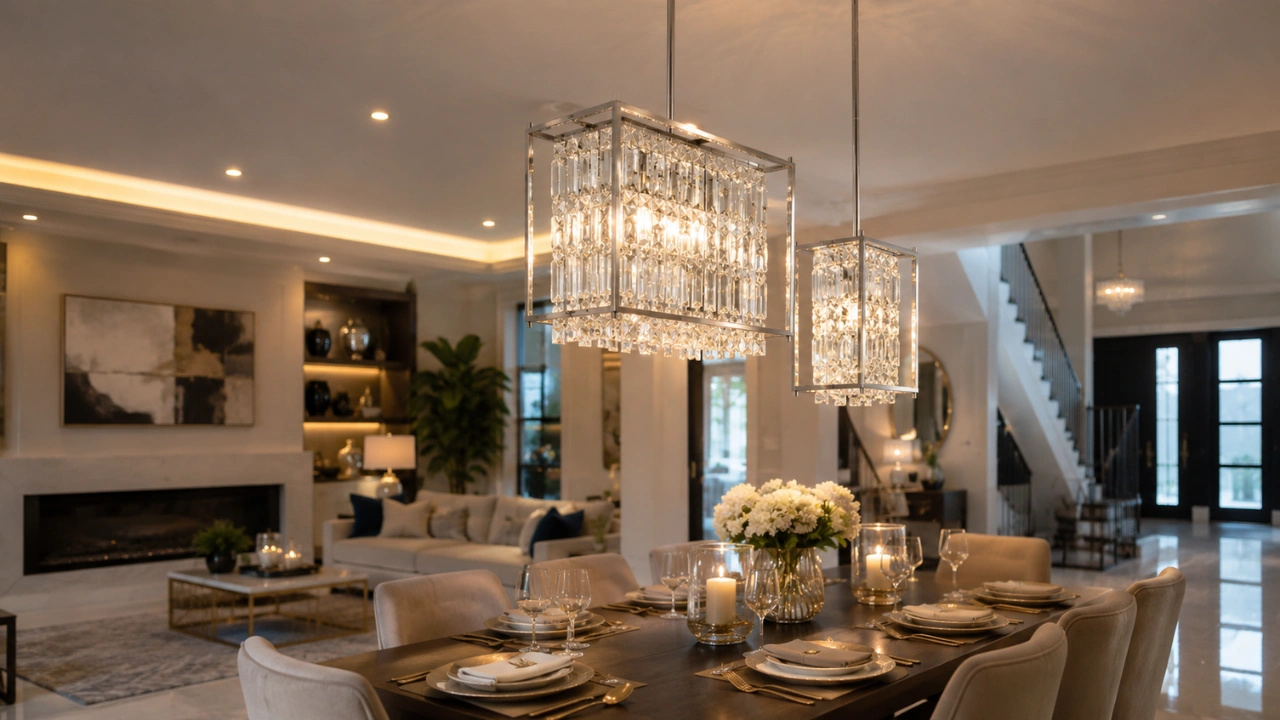
Walk into a room and something catches your eye before anything else does. It hangs from the ceiling, throws light in every direction, and somehow makes the whole space feel like it costs twice as much as it actually does. That is the quiet power of a well-chosen crystal chandelier.
But not every crystal chandelier does this. Some look flat. Some feel dated. And some just sit there doing nothing for the room. So what separates the ones that genuinely elevate a space from the ones that simply take up ceiling real estate?
It comes down to a handful of specific things, and once you know what they are, you will never look at a chandelier the same way again.
The Crystal Quality Changes Everything
The very first thing that separates an ordinary chandelier from one that commands attention is the quality of the crystal itself. Not all crystal is created equal, and the difference is immediately visible to anyone standing in the room.
Premium crystal, particularly lead-free optical crystal, is cut with precision so that it refracts light at sharper, more dramatic angles. When light passes through it, it does not just scatter. It breaks apart into vivid colour spectrums that dance across your walls and ceilings. Lower-quality acrylic or basic glass does not do this. It absorbs more light than it reflects, and the result is a dull, lifeless fixture that looks cheap regardless of its size.
If you want that instant sense of luxury, the crystal clarity and cut are non-negotiable.
Light Layering is the Real Secret
Here is something most people overlook entirely. A chandelier does not work in isolation. It works as part of a layered lighting scheme, and how it interacts with the other light sources in the room determines whether the space feels cohesive or confused.
When a crystal chandelier is used as the centrepiece of a well-layered room, with ambient lighting below and accent lighting drawing attention to artwork or architectural features, the chandelier’s reflections are amplified. The crystal picks up light from multiple angles and throws it back out in all directions, making the entire room shimmer in a way that feels deliberate and considered.
Drop the chandelier into a room with a single overhead bulb and no other light source, and that same fixture will look like a decorating afterthought.
Ceiling Height is Not Just a Practical Detail
People often think about ceiling height purely as a safety concern, making sure the chandelier does not hang too low for people to walk beneath it. But ceiling height is actually one of the most powerful visual tools in interior design, and the right chandelier can make even a standard ceiling feel more grand than it is.
In rooms with higher ceilings, a larger chandelier hung at the right drop creates a visual anchor that draws the eye upward, making the space feel intentionally designed rather than just furnished. In rooms with lower ceilings, a flush or semi-flush crystal option can still achieve that sense of light and sparkle without overwhelming the proportions.
The key is scale. A chandelier that is too small for the ceiling height looks like an afterthought. One that fills the visual space properly looks like a statement.
Gold Versus Chrome: The Finish Matters More Than You Think
This is a debate that comes up constantly, and the answer is genuinely dependent on the room rather than personal taste alone.
Gold and brass finishes, particularly antique or brushed variations, tend to add warmth to a space. They pair beautifully with timber floors, rich textiles, and earthy tones. In a room that already leans warm, a gold-finished chandelier feels like a natural extension of the palette. It reads as deliberate and luxurious.
Chrome and polished nickel finishes, on the other hand, bring a cooler, sharper energy. They suit contemporary spaces with marble, concrete, or cool-toned colour schemes. When used correctly, they make a room feel sleek and modern rather than merely shiny.
Where people go wrong is using a chrome chandelier in a warm-toned room, or a gold one in a space that is all cool whites and greys. The fixture then fights with the rest of the room instead of completing it, and that tension is what makes a space feel unresolved rather than expensive.
Where You Place It Matters as Much as What You Buy?
Dining rooms and entry hallways are the two spaces where a crystal chandelier has the most dramatic impact, and the reason is visibility. In both settings, the chandelier is seen immediately, before anything else in the room registers.
In a dining room, the chandelier should sit roughly 75 to 90 centimetres above the tabletop. At this height, it creates an intimate glow over the table while still allowing the full fixture to be appreciated from across the room. Too high and the light spills awkwardly. Too low and it feels oppressive.
In an entry hallway, a chandelier sets the tone for the entire home. Guests form an impression of the space in the first few seconds, and a well-placed, well-lit crystal chandelier tells them immediately that what follows has been thought about carefully. It signals intention.
Ready to Make the Right Investment?
If you have been weighing up whether a crystal chandelier is actually worth it for your home, the answer lies in the details above. The right fixture, in the right position, with the right finish and the right crystal quality, does not just light a room. It transforms it.
For those in Sydney ready to buy crystal chandelier pieces that genuinely deliver on that promise, NES Lighting carries a curated range of premium crystal chandeliers suited to everything from intimate dining rooms to grand entry hallways. Their team understands the nuance of placement, scale, and finish, and can help you get it right the first time rather than guessing. Visit NES Lighting and see what the right chandelier actually looks like in person.