


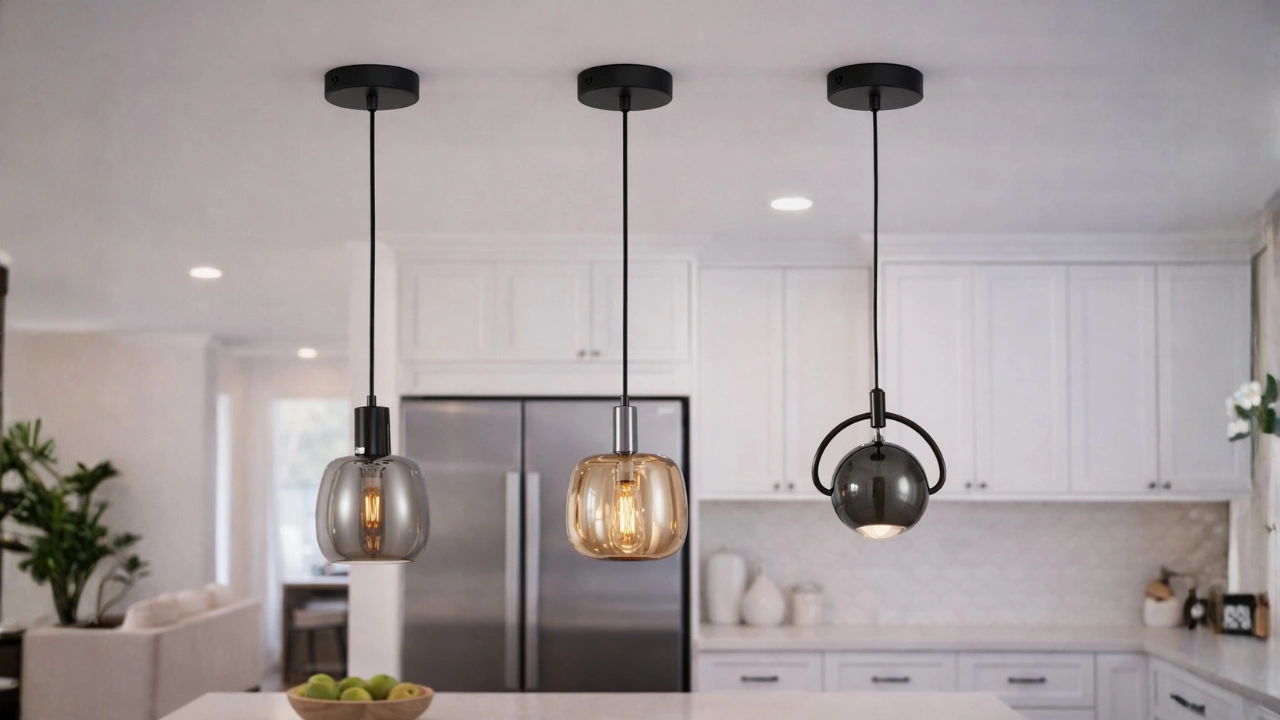
Pendant lights can completely change the feel of a space. But when spacing is wrong, even premium fittings look awkward. The light itself isn’t usually the problem. It’s the layout. Most homeowners focus on the style, colour or finish, then guess the placement. That’s where things go wrong.
Before you buy pendant lights in Australia, take a few minutes to plan spacing properly. It makes the difference between “that looks stunning” and “something feels off”.
The 2 Pendant vs 3 Pendant Decision
This is the most common mistake in kitchen layouts. People assume three pendants automatically look better. That’s not always true.
The decision depends on your island’s length and the size of the fitting. If your bench is under 1.8 metres, two pendants usually look more balanced. Adding a third often makes the space feel crowded. For longer islands over two metres, three pendants can create a stronger visual rhythm, especially when using slim designs.
For example, a narrow fitting such as the ABNER WHITE/BLACK PENDENT 5W 3000K D60MM H500MM works best in a group of three because its slim profile needs repetition to create impact. On the other hand, a wider glass piece like the ADAIR AMBER GLASS PENDENT GLASS AND CHROME METAL 400MM holds its own as a pair over a standard island.
It’s not about symmetry. It’s about proportion.
The Bench Length Formula That Fixes Most Problems
Spacing shouldn’t be eyeballed. It should be measured.
Start with the full length of your island bench. Then subtract around 300mm from each end. This prevents the pendants from sitting too close to the edges. Once that clearance is removed, divide the remaining length evenly between the fittings.
For example, on a 2400mm bench, removing 600mm total for edge clearance leaves 1800mm. If you’re installing three pendants, they should be roughly 600mm apart, centre to centre.
This simple calculation stops lights from looking squashed or stretched.
The Eye-Level Test People Forget
Spacing isn’t only horizontal. Height matters just as much.
After installation, sit on your island stool and look forward. If the bulb sits directly in your line of sight, glare will become irritating over time. This is especially noticeable in open-plan homes where the kitchen blends into living areas.
Most pendants should hang around 700mm to 900mm above the bench. Warm white lighting, around 3000K, is generally more comfortable in residential settings. Tinted glass styles like the ADAIR SMOKY GLASS PENDENT GLASS AND CHROME METAL 400MM help soften brightness and reduce harsh reflections.
If it feels slightly uncomfortable on day one, it will annoy you every day after that.
Bedroom Pendant Spacing is Different
In bedrooms, pendants are often used instead of bedside lamps. The goal here is balance and comfort, not drama.
Compact designs work best. Something like the ADAM BLACK PENDENT ALUMINIUM AND STEEL 5W 3000K 160MM suits bedside installation because it doesn’t overpower the room. Ideally, the bottom of the pendant should sit around 500 to 600mm above the bedside table height and slightly in from the mattress edge.
Too low feels intrusive. Too high feels disconnected. The position should feel intentional, not accidental.
Mixing Shapes and Finishes Without Making a Mess
Many homeowners want to mix finishes, such as amber and smoky glass. That can look great, but only if there’s consistency somewhere. The drop height should match. The canopy finishes should complement each other. The fittings should feel like they belong to the same family.
Random mixing without a visual connection makes the kitchen look busy rather than well-designed.
Open-Plan Homes Need Lighting Layers
Modern Australian homes often combine the kitchen, dining and living areas into one open space. Pendant lights need to sit within that bigger picture.
Kitchen pendants should function as task lighting. Dining lights can be the feature. Living room lighting should create comfort. If every fitting tries to be the hero, the space feels chaotic.
Good lighting is layered. Great lighting is planned.
Common Spacing Mistakes
Most layout issues come down to a few repeated errors:
- Installing three pendants on a short island
- Ignoring edge clearance
- Hanging fittings too low
- Overpowering a bedroom with oversized pendants
- Forgetting how lighting interacts with downlights and feature fixtures
They seem small at first. But you notice them every day.
Plan First. Order Second.
Before you buy pendant lights in Australia, measure your bench, check your ceiling height, sit at eye level, and think about how the whole room works together.
Browse the full pendant collection online at NES Lighting and compare sizes carefully before ordering. A well-spaced pendant layout makes even a simple fitting look high-end. Poor spacing makes expensive lighting look average.
Get the proportions right from the start.
You’ll enjoy the result every single day.